The Gut Healing Protocol: A Complete 5R Guide to Fixing Your Gut
The complete gut healing protocol: all 5 R's (Remove, Replace, Reinoculate, Repair, Rebalance), a realistic timeline, and the mistakes that stall real healing.
On this page Read more
- What Is a Gut Healing Protocol? (The Quick Answer)
- Why "Just Take a Probiotic" Keeps Letting You Down
- What's Actually Happening in Your Gut
- The 5R Protocol, Phase by Phase
- A Realistic Gut Healing Timeline
- Gut Healing Foods: What to Eat and What to Pause
- Common Mistakes That Stall Gut Healing
- DIY vs. Working With a Practitioner
- Key Takeaways
- Frequently Asked Questions
- Your Next Step
Reading time: ~13 min | Last reviewed: July 2026
You've done the cleanse. You cut the trigger foods, choked down the bone broth, started the probiotic — and for about two weeks, you actually felt like yourself again. Then, somehow, you were right back where you started: bloated, drained, googling your symptoms at midnight. Sound familiar?
Here's the thing nobody tells you: the problem usually isn't what you're doing. It's the order you're doing it in. Piling probiotics onto a gut that's still inflamed is like seeding a lawn before you pull the weeds. The seeds just don't take root.
A real gut healing protocol was never meant to be a 30-day miracle. It's a sequence — a root-cause process that works because it follows a logical order, not because it's fast. Once you understand why each step matters, the whole thing stops feeling like guesswork. It starts feeling like a plan you can trust.
This is the complete guide: what the protocol is, why the order matters, all five phases in depth, a realistic timeline, the foods that help, the mistakes that stall people, and how to tell when it's time to bring in a practitioner. Let's walk through the functional medicine gut healing protocol the way a practitioner actually would — minus the seven-minute appointment.
Want the bigger picture first? This post is the step-by-step healing protocol. If you're still trying to figure out what's driving your symptoms — the root causes and the testing that finds them — start with our complete guide to functional medicine gut health, then come back here to heal.
What Is a Gut Healing Protocol? (The Quick Answer)
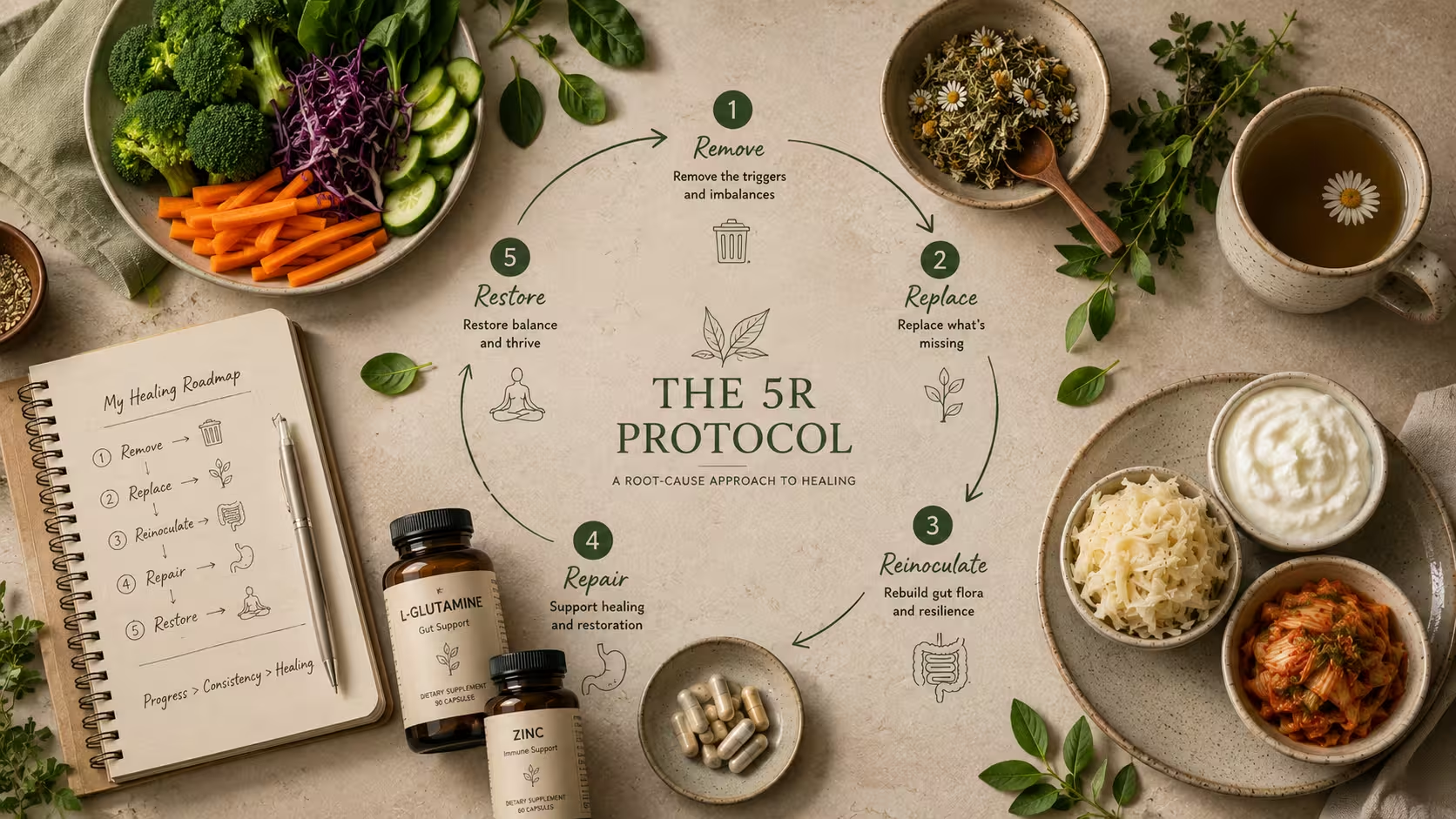
A gut healing protocol is a step-by-step process for restoring gut health, built on the 5 R's: Remove irritants, Replace digestive support, Reinoculate with beneficial bacteria, Repair the gut lining, and Rebalance stress and sleep. The order is the secret — each step creates the conditions the next one needs. Early results often show within four weeks; deeper healing takes three to six months.
The sequence is what makes it work. Here's why that matters so much.
Why "Just Take a Probiotic" Keeps Letting You Down
Most mainstream gut advice stops at two words: more fiber. It's not wrong. It's just incomplete. It treats your gut like a single broken part instead of an ecosystem with a sequence of needs.
Picture this. Your gut lining is inflamed and overrun with the wrong bacteria. Now you dump a high-dose probiotic on top. It's like planting flowers in a yard full of weeds and depleted soil. A few take root. Most don't. You feel a flicker of improvement, then you're right back where you started — convinced your gut is simply broken.
It isn't. The steps were just done out of order, or skipped entirely. A structured gut healing protocol fixes the order. That's the whole secret, and it's a lot less mysterious than the wellness aisle makes it look.
The framework itself isn't fringe. This is the functional medicine gut healing protocol proper: the 4R protocol — Remove, Replace, Reinoculate, Repair — popularized by the Institute for Functional Medicine and used in functional and integrative clinics across the country. Most practitioners add a fifth R, Rebalance, for lifestyle. Together they're known as the 5R protocol — the backbone of nearly every serious gut healing plan, and the structure the rest of this guide follows.
What's Actually Happening in Your Gut
To understand why this protocol works, you need one concept: intestinal permeability — better known as leaky gut.
Your gut lining is one cell thick. That's it. One cell standing between everything you eat and your bloodstream. Tight junctions between those cells act like a security gate: nutrients get through, everything else stays out. When chronic stress, a processed diet, infections, or certain medications loosen those junctions, the gate starts leaking.
Leaky gut, in plain English: when the gut lining gets too permeable, undigested food particles and bacterial fragments slip into the bloodstream. Your immune system flags them as invaders and fires off inflammation. Over time, that low-grade inflammation can show up as joint pain, skin flare-ups, fatigue, or brain fog — symptoms that seem to have nothing to do with digestion at all.
And honestly? You deserve the full picture here, not just the hopeful half. Leaky gut syndrome isn't a formally recognized standalone diagnosis in conventional US medicine — Cleveland Clinic and Harvard Health are both careful to say so. (Cleveland Clinic) What is well-documented: increased intestinal permeability is real, and it's linked to a range of conditions.
So we're not chasing one named disease. We're reducing what damages the gut lining and supplying what helps it repair. That distinction is exactly why this approach earns trust instead of overpromising. Your body isn't broken. It's responding to something — which is what the rest of this protocol is built to address.
One more reason gut repair matters beyond digestion: a damaged gut lining absorbs nutrients poorly. Low iron, low B12, and stubborn fatigue often trace back to a gut that can't pull nutrients in. the root cause of low ferritin
The 5R Protocol, Phase by Phase
Here's why the order matters so much: you can't rebuild a wall while someone's still swinging a hammer at it. Remove the assault first. Restore basic digestion. Then repopulate and repair. Skip ahead, and you're patching drywall during a hurricane.
Work through the phases roughly in order — they overlap, but earlier steps create the conditions the later ones need. Let's go phase by phase.
Phase 1 — Remove: Calm the Daily Irritation
You can't rebuild on top of what's causing the damage. This first phase clears out whatever's actively provoking your gut, so it finally gets a chance to settle.
That usually breaks into a few buckets. Inflammatory foods — added sugar, alcohol, ultra-processed food, and for many people, gluten or dairy during a temporary trial. Disruptors — frequent NSAID use or chronic, unmanaged stress, both of which wear down the gut lining over time. And sometimes opportunistic overgrowths — bacterial imbalances (dysbiosis), small intestinal bacterial overgrowth (SIBO), or yeast — though pinning these down usually takes a practitioner and some testing.
The window is usually four to six weeks. This is the heart of a leaky gut diet — not a forever restriction, but a temporary elimination that calms your system down enough to show what your body is reacting to.
A reader I'll call Priya had cut calories for years chasing the bloating — and never touched the real trigger. Removing dairy and alcohol for one month did more in four weeks than two years of restriction had. She'd finally taken away the irritant instead of just eating less of everything.
Phase 2 — Replace: Give Digestion What It's Missing
Now you add back what supports digestion. Under chronic stress, the body can make less stomach acid, fewer digestive enzymes, and less bile. And let's be honest: whose life isn't full of stress? Food sits. It ferments. That's exactly what feeds the bloating you're trying to escape.
This poor breakdown is also why gut problems so often show up as low iron or B12. A gut that can't process food can't absorb nutrients from it either. This phase helps your gut do its job before you ask it to host new bacteria — through slowing down at meals, chewing thoroughly, eating somewhere other than your car between meetings, and, for some people, practitioner-guided digestive support.
Phase 3 — Reinoculate: Rebuild a Diverse Microbiome
Now the probiotics make sense. This is the phase everyone wants to start with, which is exactly why it comes third. With irritants removed and digestion supported, you reintroduce beneficial bacteria to restore your gut microbiome.
This is where fermented foods earn their reputation. Yogurt, kefir, sauerkraut, kimchi, and kombucha all deliver live cultures. Just as important are prebiotics: the fibers in onions, garlic, asparagus, leeks, and slightly green bananas that feed the good bacteria so they stick around. Interest in prebiotics has been climbing even faster than probiotics lately — a sign people are catching on that you have to feed the garden, not just plant it.
Beneficial bacteria ferment that fiber into short-chain fatty acids like butyrate. Butyrate literally feeds the cells lining your gut and helps calm inflammation — one of the clearest reasons diversity matters here. This step is also the answer if you're wondering how to restore gut health after antibiotics, since a course of antibiotics clears out helpful bacteria right alongside the harmful ones.
Phase 4 — Repair: Heal the Gut Lining
Here, you give the gut lining the raw materials to rebuild those tight junctions. Good news is baked into your biology: the cells lining your gut regenerate fast — the surface turns over every few days. Your body wants to repair this barrier. It just needs the right nutrients and an environment that isn't working against it, which is exactly why this phase comes after Remove and Replace, not before.
A few nutrients get the most attention for repair. L-glutamine, an amino acid, fuels the lining cells directly. Zinc (often as zinc carnosine) supports tissue strength. Omega-3 fats and polyphenols help calm inflammation. And vitamins A and D help regulate the gut barrier and immune response. On your plate, that looks like oily fish, colorful produce, quality protein, and — a longtime favorite in this space — collagen-rich bone broth.
A quick, honest note on leaky gut supplements: a blog post can't and shouldn't hand you a dosage chart. The FDA doesn't regulate supplements with the same rigor it applies to medication, so quality and potency vary a lot between brands. Talk specifics through with your practitioner rather than self-prescribing. This is where the deeper healing happens, and it can't be rushed — rebuilding a chronically damaged barrier is a months-long project, not a weekend one.
Phase 5 — Rebalance: Protect the Progress You've Made
This is the R everyone skips, and it quietly sabotages everyone who skips it. Your gut and your nervous system are in constant conversation through the gut-brain axis and the vagus nerve — and it runs both directions. When you're stuck in a long fight-or-flight state, your body pulls resources away from digestion — it has other priorities. The result: less stomach acid, slower or erratic motility, and a more permeable gut lining. High stress alone can loosen the very tight junctions you're trying to rebuild.
So Rebalance isn't an afterthought tacked onto the end. It's the maintenance plan. Protect your sleep and a steady circadian rhythm. Build in real stress recovery — breathwork, time outside, gentle movement, anything that reliably pulls you out of fight-or-flight. Move your body regularly. This is the phase that turns a temporary reset into something that lasts, and where most relapses actually get prevented.
A Realistic Gut Healing Timeline
This is the part the internet keeps getting wrong, so let's be straight with each other. There's no universal "heal your gut in 14 days." Here's a realistic, honest range:
- Weeks 1–4: Early wins. Many people notice less bloating, steadier energy, and clearer thinking once the biggest irritants are gone. Some hit a rough patch first — sometimes called a "die-off" reaction — as the gut environment shifts. It's usually short-lived and mild.
- Months 1–3: The rebuilding phase. Your microbiome starts to shift, and the gut lining begins meaningful repair. The gains get more stable and less likely to vanish after one bad day.
- Months 3–6: Deeper healing — especially with long-standing issues, a history of antibiotics, autoimmune involvement, or something like SIBO. Complex cases can take longer still, and often call for retesting to confirm things have actually cleared.
Why isn't it faster? The surface cells of your gut lining renew every few days. But repairing chronic damage and rebuilding a resilient microbiome is slower and far less linear. Two steps forward, one step back is normal. It is not failure. And if someone's promising you a fixed gut in two weeks, they're selling you something.
Signs Your Gut Is Healing
How do you know your protocol is working — before the labs catch up? Watch for:
- More regular, comfortable digestion: less bloating, less gas, fewer surprises
- Steadier energy through the afternoon instead of the 3 p.m. wall
- Brain fog finally lifting
- Better tolerance of foods that used to wreck you
- Better skin, mood, and sleep that seem unrelated to digestion — but aren't
These shifts rarely arrive all at once. They come gradually, which is exactly why tracking them week to week keeps you motivated when day-to-day progress feels invisible.
Gut Healing Foods: What to Eat and What to Pause
You don't need a 47-item shopping list from some influencer's pantry haul. A practical gut reset menu looks like this.
Lean into:
- Colorful vegetables
- Fermented foods: yogurt, kefir, kimchi, sauerkraut
- Prebiotic fibers: onion, garlic, asparagus, leeks
- Bone broth and omega-3-rich fish
- Proteins that are easy to digest
These are your everyday gut healing foods. They're what a real gut healing protocol runs on: the produce aisle and the farmers market, not a specialty supplement shelf.
Pause for now:
- Added sugar and alcohol
- Ultra-processed food
- Common triggers like gluten and dairy during the elimination window — you'll slowly reintroduce these later to see how you respond
A leaky gut diet isn't a life sentence. It's a temporary, smart narrowing so your body can reset — and so you can finally see your own patterns clearly instead of guessing in the dark.
Common Mistakes That Stall Gut Healing
Even motivated people trip on the same handful of things when working through a gut healing protocol.
- Starting with probiotics and skipping Remove. Seeding before weeding — the single most common mistake. Sequence matters more than supplements.
- Running all five phases at once. Overwhelming, hard to sustain, and nearly impossible to learn from.
- Quitting around week three. Early die-off or slow progress gets misread as failure — right before the real gains kick in.
- Testing too early. An expensive stool panel often just confirms "something's off" before you've done the foundational work that makes those results actionable.
- Ignoring Phase 5. No amount of glutamine outruns chronic stress and four hours of sleep a night.
- Chasing the "30-day cure." A 30-day gut reset can be a great start, but expecting complete healing in a month sets you up to feel defeated for no good reason.
And sometimes the real mistake is going it alone when you shouldn't. Some cases genuinely need testing and a practitioner. More on that next.
DIY vs. Working With a Practitioner
A foundational gut healing protocol — cleaning up the diet, supporting digestion, reinoculating, supplying repair nutrients, managing stress — is reasonable to start on your own. Plenty of people feel meaningfully better doing exactly that.
But there are times it's worth bringing in a qualified practitioner, ideally one certified through the Institute for Functional Medicine. Consider it especially if:
- You're dealing with persistent or severe symptoms
- You have a suspected infection, like SIBO or a parasite
- You have an autoimmune condition
- You have a history of disordered eating (elimination diets carry real risk here)
- Symptoms won't budge after a genuine, consistent effort
If testing is the right next step, a comprehensive stool analysis like the GI-MAP is usually where practitioners start — it maps your microbiome, inflammation, and gut-lining markers in one pass.
One more honest note: a lot of functional medicine care isn't covered by insurance the way a standard office visit is. Ask about costs upfront. Proper testing can reveal root causes a blog post never could, and one-on-one guidance keeps you from spinning your wheels — or doing harm. Prepping for that first visit? Our first-appointment checklist covers exactly what to bring and ask.
Key Takeaways
- A gut healing protocol works because of its sequence, not its speed — Remove, Replace, Reinoculate, Repair, Rebalance
- Probiotics fail when they're step one; they belong at step three, after irritants are gone and digestion is supported
- "Leaky gut syndrome" isn't a formal diagnosis, but increased intestinal permeability is real and well-documented
- Expect early wins in weeks 1–4 and meaningful healing over 3–6 months; two steps forward, one back is normal
- Phase 5 (sleep and stress) is the foundation, not the add-on — chronic stress loosens the junctions you're rebuilding
- A gut reset runs on the produce aisle, not the supplement shelf
- Get a practitioner involved for SIBO, autoimmunity, a history of disordered eating, or symptoms that won't budge
Frequently Asked Questions
How long does a gut healing protocol take?
What is the 4R or 5R gut healing protocol?
Can you actually heal a leaky gut?
Do probiotics heal leaky gut on their own?
How do I know if my gut is healing?
How do you restore gut health after antibiotics?
Should I do the 5R protocol on my own or see a practitioner?
Your Next Step
Remember that 3 p.m. wall, the brain fog after lunch, the bloodwork that came back "normal" while you felt anything but? None of that was random. Your gut was never simply broken. It was an ecosystem asking for the right things in the right order.
If there's one thing to take with you, it's this: a gut healing protocol works because of its sequence, not its speed. Remove, replace, reinoculate, repair, rebalance — and give it the months it honestly takes. That shift, from chasing a 30-day cure to committing to a real root-cause process, is what finally moves the needle for most people.
You don't have to map out all five phases this week. Start with Phase 1: pick one daily irritant to remove, and one calming, fiber-rich food to add. That's a real beginning.
Ready to trade guesswork for a plan? Download the free Gut Reset Starter Guide — a week-by-week walkthrough of the 5 R's with food lists and a checklist. Or, if your symptoms have been dragging on, explore our complete gut health guide to pinpoint the root cause first.
Fact Checked By Dr. Prerana Suryavanshi, MD, MBBS
This medical analysis has been peer-reviewed and vetted by a credentialed practitioner to ensure diagnostic safety.

Written by Dr. Pooja, PharmD
Dr. Pooja didn't set out to write about gut health and hormones. She set out to become a pharmacist — learning how drugs move through the body, why they interact the way they do, and what it actually takes to prove a treatment works. That training is still the lens she writes through today.
View all articles by Dr. Pooja