Low Progesterone Symptoms: 9 Signs Your Body Is Sending
Low progesterone symptoms often hide behind a normal period. The 9 signs, why your lab test missed them, and what to ask your practitioner.
On this page Read more
- First, What Progesterone Actually Does
- Why Low Progesterone Symptoms Get Missed So Often
- The 9 Most Common Low Progesterone Symptoms
- The Part Most Articles Skip: Where This Science Is Still Contested
- Why Your Progesterone Test Came Back "Normal"
- Supporting Progesterone Starts With Ovulation, Not Supplements
- When to Bring This to a Practitioner
- The Bottom Line
- Frequently Asked Questions
Low Progesterone Symptoms: 9 Signs Your Body Is Sending
You've probably been told your labs look normal.
Maybe your period shows up right on schedule, so nobody's worried. Maybe you mentioned the 3 a.m. wake-ups. Or the anxiety that arrives like clockwork the week before you bleed. And got a shrug. Maybe you stopped bringing up the spotting because it seemed too small to matter.
Here's the thing: low progesterone symptoms don't always come with an irregular period. That's the part almost nobody explains.
A meta-analysis in Epidemiologic Reviews looked at healthy, regularly menstruating women. Some of their cycles looked normal on the outside. But they weren't producing enough progesterone. Across the studies reviewed, that share ranged from 13% to 82%. According to PubMed, the researchers call these cycles a quiet estrogen-progesterone imbalance (DOI).
Read that again. A regular period proves you bled. It doesn't prove much else.
So if you've been brushed off because your cycle "looks fine," this post is for you. We'll walk through the nine low progesterone symptoms that show up most often. Then why standard testing misses them. And — honestly — where this science is still unsettled.
Before we go further: This is education, not diagnosis. Reading a symptom list isn't the same as having a condition. Take what resonates to a practitioner who can see your whole picture.
Key takeaways
- Progesterone is made after ovulation, so low progesterone symptoms cluster in the two weeks before your period
- A regular cycle doesn't rule it out — silent ovulatory disturbances turn up in 13% to 82% of regularly menstruating women
- The classic "day 21" test assumes you ovulated on day 14, which is why so many results come back falsely reassuring
- Luteal phase deficiency is not a settled diagnosis, and any promise that treating it fixes fertility is overstated
- Support starts upstream, with the conditions that let you ovulate consistently
First, What Progesterone Actually Does
Progesterone isn't a background player. Your body makes almost all of it from one structure. It's called the corpus luteum, and it forms in your ovary right after you release an egg.
That single fact explains nearly everything below.
No ovulation means no corpus luteum. No corpus luteum means very little progesterone. Your adrenal glands chip in a little. But they can't cover the gap.
Here's the cascade worth remembering:
You ovulate → the corpus luteum forms → progesterone climbs for about 10 to 14 days → if there's no pregnancy, it drops → your period starts.
When that climb is weak or ends too early, the second half of your cycle takes the hit. That stretch is your luteal phase. It's the window where low progesterone symptoms tend to cluster. Which is why so many women feel like a different person for ten days a month. Then fine again.
Sound familiar? You're not imagining the pattern. And you're definitely not alone in it.
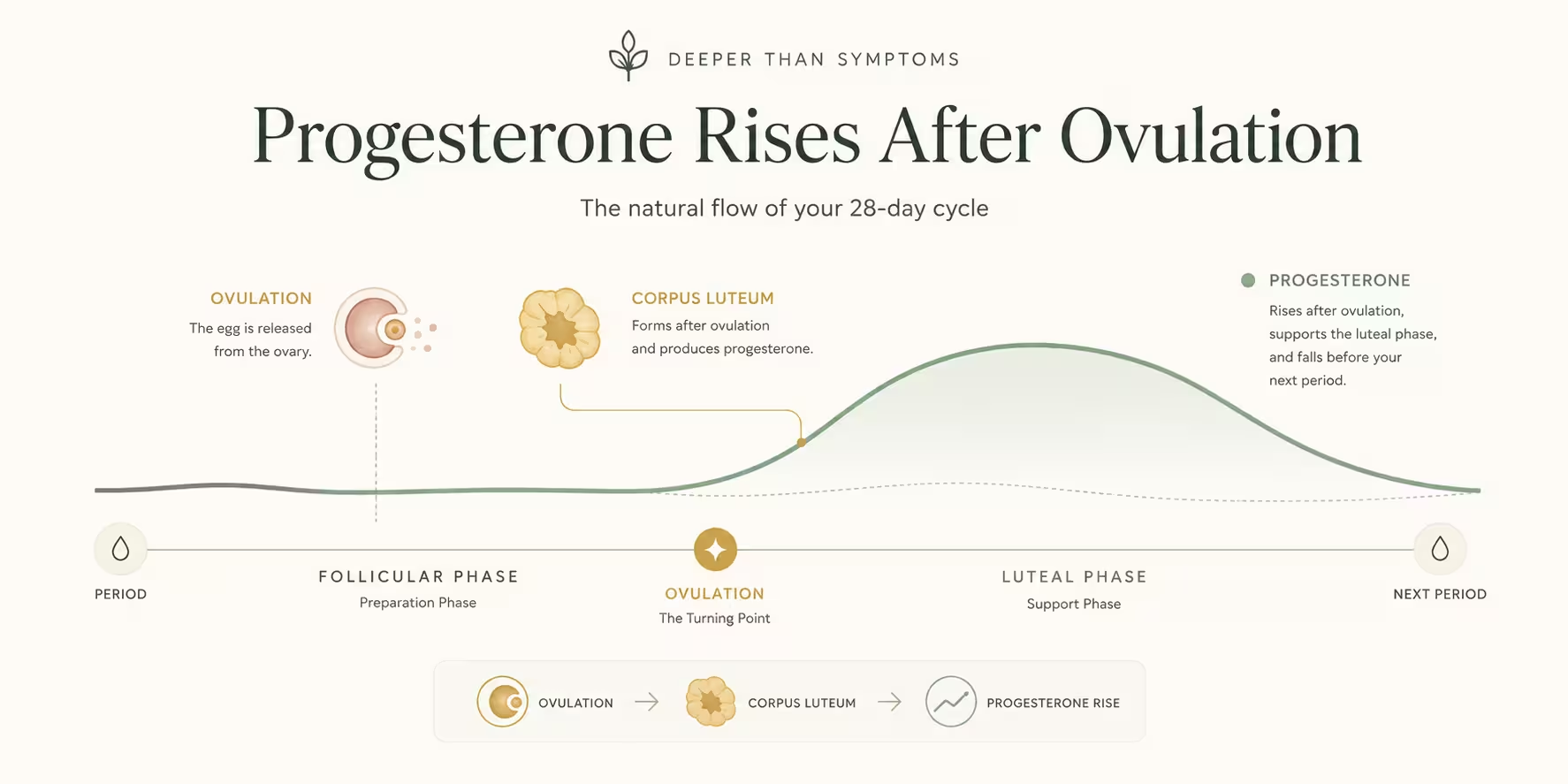 Diagram showing progesterone rising after ovulation and falling before a period.
Why Low Progesterone Symptoms Get Missed So Often
Three reasons, and they stack on top of each other.
They look ordinary on their own. Bad sleep. Anxiety. Headaches. Spotting. Each one has a dozen possible explanations. So each gets addressed separately — or not at all. What matters is the timing. And timing takes tracking that a 12-minute appointment rarely captures.
Testing usually answers a different question. A standard "day 21" draw is built to confirm whether you ovulated. It was never designed to catch low progesterone symptoms. It can't tell you whether your luteal phase was strong enough to feel good in.
"Normal" and "optimal" aren't the same word. Reference ranges describe a population. They don't describe you. A result inside the range still needs context: your cycle day, your history, what you're living with. (For a deeper look at why lab reference ranges often fail to catch subtle imbalances, read our guide to functional vs. conventional lab ranges.)
That gap between technically normal and actually well? That's where low progesterone symptoms live. And a lot of women live there for years.
The 9 Most Common Low Progesterone Symptoms
Low progesterone symptoms commonly described in clinical and educational sources include:
- A luteal phase shorter than 11 days
- Spotting in the days before your period
- Premenstrual anxiety, irritability, or mood crashes
- Disrupted sleep, especially early-morning waking
- Headaches or migraines right before your period
- Breast tenderness, bloating, and water retention
- Libido that's quietly disappeared
- Cycles that have turned unpredictable
- Trouble conceiving or very early pregnancy loss
These signs of low progesterone rarely arrive alone. Here's what makes each one useful.
1. A Luteal Phase Shorter Than 11 Days
This is the most telling sign of progesterone deficiency on the list.
Count from the day after you ovulate to the day before your period. Is that stretch consistently under 11 days? Progesterone may not be holding your uterine lining long enough. Some women notice their cycle has quietly shrunk from 29 days to 25. Most never thought to mention it.
You can track this yourself. Use basal body temperature, ovulation strips, or a cycle app. Just make sure it logs a confirmed ovulation date, not a predicted one.
2. Spotting in the Days Before Your Period
Light brown or pink spotting two to four days before real bleeding starts? That's one of the most specific low progesterone symptoms there is.
The mechanism is simple. Progesterone holds your uterine lining steady. When it falls too early, the lining starts letting go. That happens before your period officially begins.
It's a small thing. It's easy to write off as "just how my period starts." Log it anyway.
3. Premenstrual Anxiety, Irritability, or Mood Crashes
Does your mood fall apart the week before your period, then lift the moment you bleed? That timing is telling you something. It's one of the most disruptive low progesterone symptoms women report.
Progesterone converts into allopregnanolone. That's a neurosteroid, and it acts on GABA-A receptors — the same ones anti-anxiety medications target. According to PubMed, research on allopregnanolone and mood describes a U-shaped relationship. Both low levels and fast-shifting levels are linked to mood symptoms. Some women are simply far more sensitive to hormone change than others (DOI).
That last part matters more than it sounds. Two women can have identical lab values and completely different experiences.
Your sensitivity is real data. It's not you being dramatic.
4. Waking at 3 a.m. — or Not Falling Asleep at All
Same mechanism, different symptom. That calming, GABA-supporting effect is part of why progesterone is tied to deeper sleep.
Most women describe it the same way. You fall asleep fine. Then you surface over and over in the early hours. And it's usually worse in the luteal phase.
Sleep disruption is also one of the first low progesterone symptoms women notice in perimenopause. Often years before a single hot flash.
5. Headaches or Migraines Right Before Your Period
Hormone headaches tend to cluster in the late luteal phase and the first days of bleeding. That's when estrogen and progesterone both drop.
Can you predict your headaches by cycle day rather than by stress or weather? That pattern is useful clinical information. Bring it up, even if it's never felt worth mentioning.
6. Breast Tenderness, Bloating, and Water Retention
You'll see these filed under estrogen dominance. The idea is that when progesterone is low, estrogen's effects run unopposed.
One important caveat: estrogen dominance is a popular framing, not a formal diagnosis. It's a useful way to understand why these low progesterone symptoms cluster together. But you won't find it in diagnostic manuals. Any practitioner treating it as a fixed disease is overstating things.
Use it as a lens. Not a label.
7. Libido That's Quietly Disappeared
Low libido shows up consistently across the research. It usually appears alongside other low progesterone symptoms rather than on its own.
It's also one of the least reported. Partly because nobody asks directly. Partly because it's easy to pin on stress or your relationship instead. Both things can be true at once.
8. Cycles That Have Turned Unpredictable
Cycles that swing by more than a few days often point to patchy ovulation. So do cycles that skip, or ones that have slowly gotten shorter.
This gets especially common in perimenopause, and it catches women off guard. Progesterone usually declines earlier and faster than estrogen during that transition. It's why so many women get heavier, closer-together periods alongside brand-new anxiety and insomnia. All while being told they're "too young for menopause."
You're not too young. This transition starts earlier than most people expect.
9. Trouble Conceiving or Very Early Pregnancy Loss
Progesterone builds the uterine lining a fertilized egg implants into. Then it sustains early pregnancy until the placenta takes over.
Cleveland Clinic describes pregnancy-specific low progesterone symptoms including spotting, low blood sugar, and breast tenderness. It also notes increased risk of miscarriage and preterm labor.
If you're pregnant and experiencing bleeding or cramping, call your obstetric provider today. That's not something to research your way through.
The Part Most Articles Skip: Where This Science Is Still Contested
I'd rather be honest with you than tidy.
You'll see "luteal phase defect" treated across the wellness internet as a settled diagnosis with a clear fix. The real picture is messier.
The American Society for Reproductive Medicine took this up in 2021, in a committee opinion in Fertility and Sterility. According to PubMed, their position is careful. Luteal phase deficiency is described as a luteal phase of 10 days or fewer. But it hasn't been proven to independently cause infertility or recurrent pregnancy loss. It shows up in fertile, normally menstruating women too. They also note real disagreement about how to diagnose it at all (DOI).
So what do you do with that?
Not dismiss what you're feeling. That statement is about diagnostic labels and fertility outcomes. It's not about whether your premenstrual anxiety is real. It is.
What it should change is your skepticism threshold. Be careful with anyone promising that treating low progesterone symptoms will resolve fertility struggles. That's a bigger claim than the evidence supports.
Your symptoms deserve to be taken seriously. Certainty has to be earned.
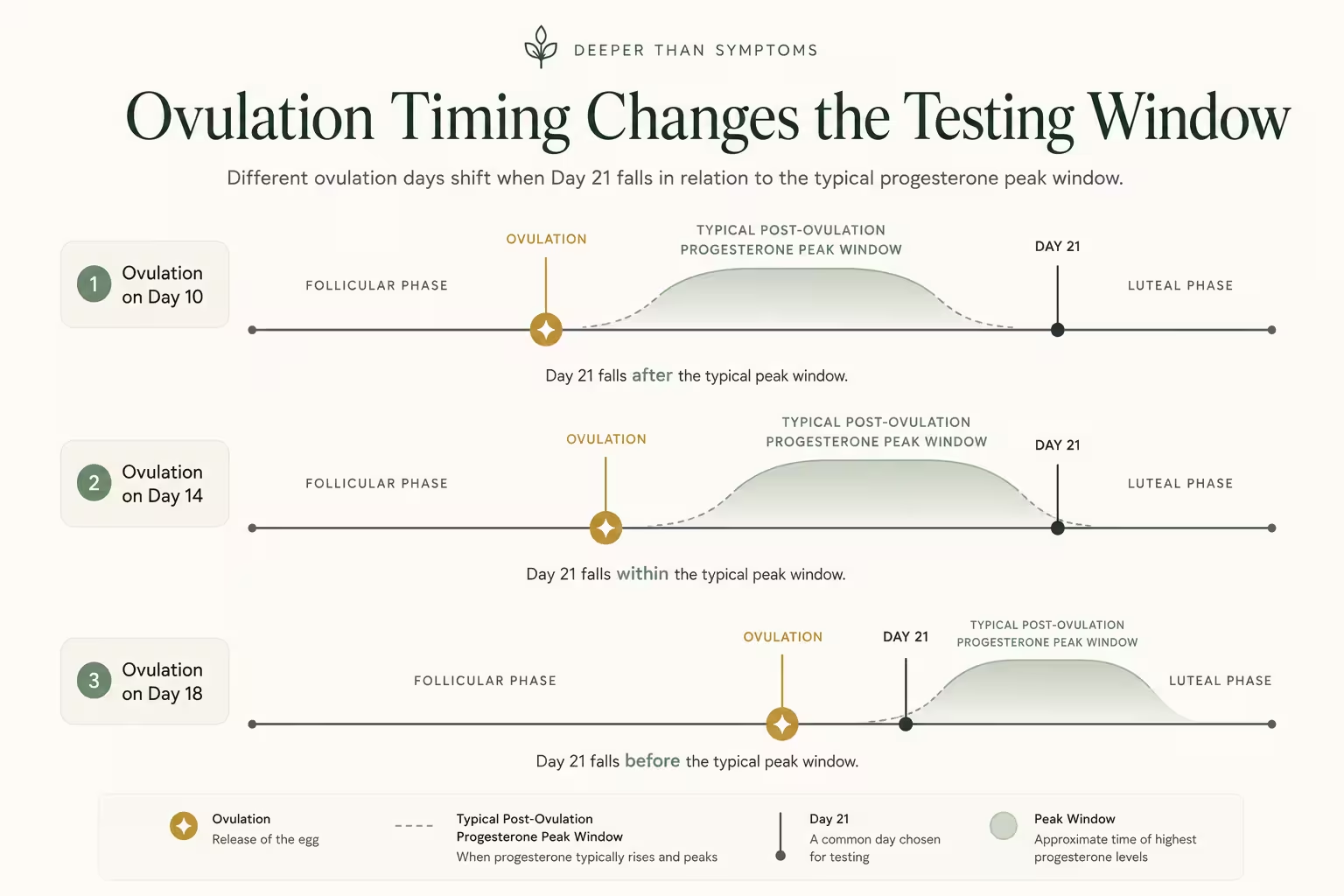 Chart showing why day 21 progesterone testing misses the peak when ovulation is late.
Why Your Progesterone Test Came Back "Normal"
Timing is the biggest variable here, and it gets mishandled constantly.
Progesterone peaks roughly 5 to 7 days after ovulation. Not on a fixed calendar date. That classic "day 21" instruction assumes you ovulated on day 14. Ovulated on day 18? A day-21 draw catches progesterone on the way up, so the number looks low. Ovulated on day 10? You've already missed the peak.
Here's a more useful approach to discuss with your practitioner:
- Confirm ovulation first — LH strips, basal body temperature, or urinary PdG — then test 7 days later
- Write your actual cycle day on the requisition, not the assumed one
- Read the result alongside your symptom log, not instead of it
- Consider testing across two or three cycles — one cycle is a snapshot, not a pattern
If your cycles are irregular, or you're in perimenopause, a single blood test tells you less. Many practitioners weight your low progesterone symptoms more heavily than the number. Preparing your symptom history and questions before your visit makes a world of difference — check out our functional medicine first appointment checklist for exact questions and tracking tools to bring along.
Supporting Progesterone Starts With Ovulation, Not Supplements
Progesterone depends on ovulation. So the work that matters most happens upstream, on the conditions that let you ovulate consistently.
The foundations worth looking at:
- Are you eating enough? Under-eating is one of the most reliable ways to shut down ovulation. It gets missed constantly in women who train hard.
- What's your stress load doing? Long-running stress signals get in the way of the hormone cascade that triggers ovulation. This is HPA axis territory, which also plays a core role in morning fatigue and HPA axis dysfunction symptoms.
- How's your sleep? Your reproductive hormones are wired tightly to your circadian rhythm.
- Has your thyroid been checked properly? Thyroid problems are a well-known driver of patchy ovulation. Worth ruling out early.
- Is your training matched to your fuel? Movement supports hormone health. Hard training without enough food does the opposite.
You'll also see vitex (chaste tree berry), vitamin B6, magnesium, and zinc discussed everywhere. The evidence quality varies a lot. And vitex isn't right for everyone — some practitioners find it worsens things in certain PCOS cases.
That's a conversation for someone who knows your history. Not a solo experiment.
Prescription progesterone and hormone therapy exist, and they help a lot of people. Those are personal decisions that belong in a clinical setting.
When to Bring This to a Practitioner
Reach out if you're noticing:
- Cycles consistently under 25 days, or a luteal phase under 11 days
- Regular spotting before your period
- Mood or sleep changes that are affecting your daily life
- Twelve months of trying to conceive without success — six months if you're over 35
- Any bleeding or cramping during pregnancy — same day, not at your next appointment
Go in with data. Track three cycles: start dates, confirmed ovulation, spotting, sleep, and mood. That will do more for you than any symptom list online. Including this one. Pair your log with our first appointment checklist so you walk into your visit fully prepared.
The Bottom Line
A regular period tells you that you bled. It doesn't tell you that you ovulated well. Or that your luteal phase lasted long enough. Or that progesterone rose the way it should have.
That's exactly where low progesterone symptoms hide — in the two weeks before you bleed, in the 3 a.m. wake-ups, in the spotting you stopped mentioning.
None of it proves a diagnosis on its own. All of it is information.
Your body isn't broken. It's responding to something, and the pattern is the clue. Track it. Bring it to someone qualified to read it. Then let your timing do the talking. To understand the six upstream drivers that interrupt ovulation in the first place, explore our deep dive on what causes low progesterone.
Your next step: Grab our free Cycle Symptom Tracker. It's a simple three-cycle log for ovulation, luteal length, spotting, sleep, and mood. Built to hand straight to your practitioner.
Frequently Asked Questions
What are the most common low progesterone symptoms?
Can low progesterone cause anxiety and mood swings?
Can you have low progesterone with regular periods?
Why did my progesterone test come back normal when I have symptoms?
Is low progesterone the reason I can't get pregnant?
How can progesterone be supported naturally?
This post is for educational purposes only. It isn't intended to diagnose, treat, cure, or prevent any disease. Please work with a qualified healthcare practitioner before making changes to your health regimen.
Author: Dr. Pooja, PharmD | Medically reviewed by: Dr. Prerana Suryawanshi, MBBS Last reviewed: August 2026
Cycle Symptom Tracker
Download our free Cycle Symptom Tracker — a 3-cycle log for ovulation, luteal length, spotting, sleep, and mood to bring to your practitioner.
Download PDF FreeFact Checked By Dr. Prerana Suryawanshi, MBBS
This medical analysis has been peer-reviewed and vetted by a credentialed practitioner to ensure diagnostic safety.

Written by Dr. Pooja, PharmD
Dr. Pooja didn't set out to write about gut health and hormones. She set out to become a pharmacist — learning how drugs move through the body, why they interact the way they do, and what it actually takes to prove a treatment works. That training is still the lens she writes through today.
View all articles by Dr. Pooja