The Root Cause of Chronic Sinusitis: 6 Drivers Antibiotics Miss
The root cause of chronic sinusitis is rarely one infection. Here are 6 upstream drivers — including two most doctors never check — and what to do next.

On this page Read more
- What is the root cause of chronic sinusitis?
- What "chronic" actually means — and why it changes everything
- Driver 1: A damaged barrier, a disrupted microbiome, and biofilms
- Driver 2: Type 2 inflammation (why polyps keep coming back)
- Driver 3: NSAID sensitivity (the most under-recognized driver on this list)
- Driver 4: Your teeth
- Driver 5: Environmental and fungal exposures — separating the established from the contested
- Driver 6: The gut-immune axis and food sensitivities
- Two people, two very different root causes of chronic sinusitis
- When to stop researching and see a doctor now
- Finding the root cause of chronic sinusitis: what to actually investigate
- The one thing to take away
- Frequently Asked Questions
- Sources
The Root Cause of Chronic Sinusitis: 6 Drivers Antibiotics Miss
By Dr. Pooja, PharmD · Last updated July 2026 · 12 min read
If you've filled the same antibiotic prescription three or four times this year and you're still waking up with a stuffed nose and pressure behind your eyes, here's what I want you to know first: you're not imagining this, and you haven't done anything wrong. Something real is keeping your sinuses inflamed. The question is what.
Here's a number that might explain more than it seems to. One study looked at 374 patients evaluated for chronic sinus disease at a specialist ENT clinic. The patients' teeth weren't mentioned anywhere in the chart — for 73.8% of them.
That's not a small oversight. Somewhere between 5% and 40% of chronic maxillary sinusitis traces back to a dental source. Think an abscessed root, an old implant, or a failed extraction site sitting just millimeters below the sinus floor. When researchers checked the imaging these same patients already had, a quarter of the radiology reports never mentioned the maxillary teeth at all. And when a dental problem was flagged, it went unaddressed in nearly half of cases.
That number points to the real problem. The root cause of chronic sinusitis usually isn't one stubborn infection — it's a category question. And the categories get missed all the time.
What is the root cause of chronic sinusitis?
Chronic sinusitis rarely has a single cause. Six upstream drivers keep sinus tissue inflamed past twelve weeks: a damaged sinus barrier with biofilms, type 2 immune inflammation, NSAID sensitivity, an infected upper tooth, environmental or fungal exposure, and gut-immune factors. Antibiotics address only part of one of them, which is why symptoms return.
Key takeaways
- Chronic sinusitis is defined by twelve weeks or more of inflammation — not by a specific germ
- Two people with identical symptoms can have opposite underlying biology (type 2 vs non-type 2)
- Biofilms survive antibiotic courses, which explains symptoms returning within weeks
- One-sided symptoms are the single strongest clue pointing to a dental source
- If ibuprofen worsens your nose, ask a doctor about AERD by name
- Some symptoms need a doctor now, not a root-cause workup — see the red flags below
A quick note on what this article is. This is an educational overview of the upstream drivers behind persistent sinus inflammation, written to help you have a more productive conversation with a qualified practitioner. It's not a diagnostic tool, and nothing here replaces an in-person evaluation.
What "chronic" actually means — and why it changes everything
Chronic rhinosinusitis is defined by duration and symptom pattern, not by a specific germ. The lining of your nose and sinuses stays inflamed for twelve weeks or longer. Symptoms include nasal blockage, facial pressure, discolored discharge, or a dulled sense of smell.
Notice what's missing from that definition. There's no bacterium in it. No virus. Chronic rhinosinusitis causes are, by definition, whatever is keeping the tissue inflamed long past the point where an ordinary infection would have cleared on its own.
So how common is it? That depends entirely on how strictly you define it. Roughly 2% of US adults meet strict symptom criteria at any given moment. Broader self-report surveys put the figure closer to 11–15%.
That spread tells you something on its own: different researchers are measuring different versions of the same label.
Here's the part that reframes the whole problem. Specialists no longer treat chronic sinusitis as one disease. They sort it into endotypes — subtypes defined by which immune pathway drives the swelling. The major split is between type 2 inflammation (eosinophils, IL-4, IL-5, IL-13 — the allergic-flavored pathway) and non-type 2 inflammation (neutrophils, TH1/TH17 pathways).
Sound familiar — the friend whose sinus infection cleared with a neti pot and a diet change, while yours didn't budge no matter what you tried? Two people can have identical symptoms and opposite underlying biology. One responds beautifully to an anti-inflammatory approach. The other doesn't move an inch. That's why one-size protocols let so many people down. And it's why the honest answer to "what's my root cause?" starts with narrowing the category.
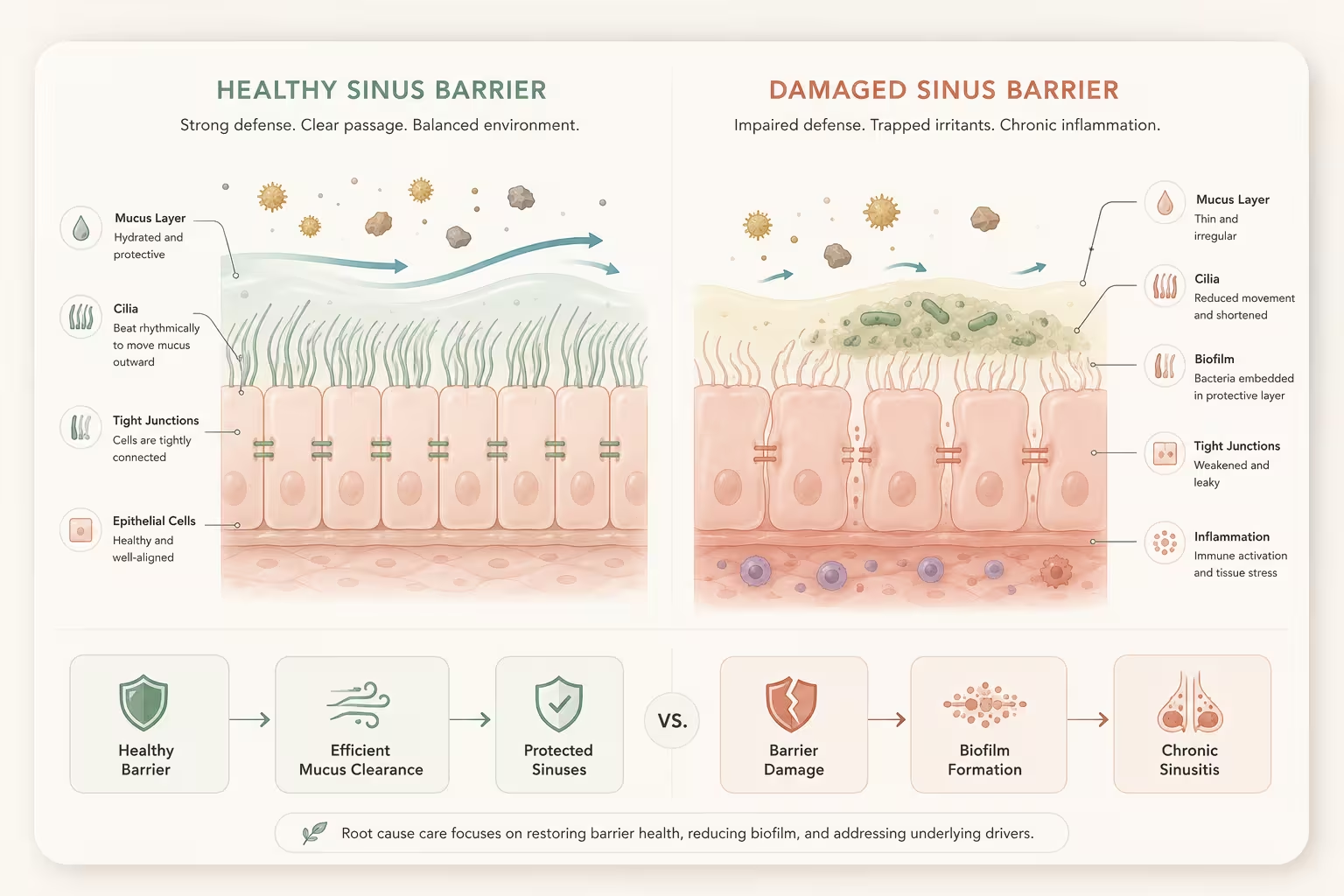 How an intact sinus barrier clears mucus — and what changes when it's damaged.
Driver 1: A damaged barrier, a disrupted microbiome, and biofilms
The lining of your sinuses is a working barrier. Picture a layer of cells knitted tightly together, coated in mucus, swept clean by tiny hairs beating in coordinated waves. When that barrier holds, it keeps microbes outside and your immune system calm.
When it doesn't, here's the cascade:
Barrier damage → more exposure to microbes and allergens → epithelial cells release alarm signals (TSLP, IL-25, IL-33) → immune activation → swelling that blocks drainage → more stagnation, more barrier damage. It's a loop that feeds itself. Your body isn't malfunctioning here — it's responding, over and over, to something that never gets resolved. Two things make that loop especially sticky.
The first is microbiome dysbiosis. Sinus tissue in chronic sinusitis tends to show less microbial diversity and more of certain problem organisms, especially Staphylococcus aureus. One study tied this pattern more strongly to the non-type 2 endotype. Another reminder: the picture shifts from person to person.
The second is nasal biofilm infection. Bacteria in a biofilm aren't free-floating loners. They build a slime layer around themselves and hide inside it, together.
In there, they shrug off both antibiotics and your own immune defenses. S. aureus biofilms are linked to more severe, harder-to-treat disease.
This explains something you've likely lived through. A two-week antibiotic course clears your symptoms. Then they creep back within a month. The free-floating bacteria die. The biofilm community doesn't.
One honest caveat. Researchers who study this say the direction of cause is still unresolved. Does dysbiosis cause the swelling? Or does a swollen, poorly-draining sinus simply favor those bugs to begin with? Probably both, feeding each other in a loop.
But "we don't fully know yet" is the honest answer. Be wary of anyone who tells you otherwise with total confidence.
Driver 2: Type 2 inflammation (why polyps keep coming back)
If you've had nasal polyps removed and watched them regrow, this section is likely your section.
Type 2 inflammation runs on a specific cytokine network — IL-4, IL-5, and IL-13 — that pulls eosinophils (a type of white blood cell) into the tissue. Those cells release proteins that damage the lining. The damage sets off more alarm signals. More alarm signals pull in more cells. Round and round it goes.
A European registry of chronic rhinosinusitis patients found a large share showed markers of this endotype. 78% had blood eosinophilia. 40% had elevated total IgE. 59% had asthma alongside their sinus disease.
That asthma overlap isn't a coincidence. Your upper and lower airway behave as one connected system. If you have adult-onset asthma and stubborn sinus disease, you're describing a recognized pattern. Not two unrelated problems that just happen to show up together.
What this means practically. Surgery removes polyps. It doesn't switch off the network that grew them in the first place. Leave the driver underneath untouched, and regrowth is expected. Not bad luck. This is also the endotype where newer targeted drugs have changed outcomes a great deal. Worth knowing, even if you lean toward a functional approach first.
Driver 3: NSAID sensitivity (the most under-recognized driver on this list)
There's a specific, well-defined condition called aspirin-exacerbated respiratory disease (AERD) — historically known as Samter's triad. It's three things showing up together:
- Chronic rhinosinusitis with nasal polyps
- Asthma (usually adult-onset)
- Respiratory reactions to aspirin and other NSAIDs — think ibuprofen or naproxen
The numbers here are striking. AERD occurs in roughly 7% of adults with asthma, and roughly twice that in severe asthma. Among people who have both asthma and nasal polyps, estimates run to 30–40%.
And here's the thing — it gets missed all the time. Medical records suggest a rate near 3%. Formal aspirin-challenge testing finds it in about 21% of similar patients.
That gap exists because nobody asked the right question.
The right question is simple: when you take ibuprofen, does your nose get worse? Not "are you allergic to ibuprofen." Most people with AERD never get hives or a classic allergic reaction.
They get congestion, sinus pain, wheezing, and sneezing — sometimes within an hour. If that's you, odds are you filed it under "painkillers just don't agree with me" and never linked it to your sinuses.
If this sounds like you, raise it with your doctor or an ENT by name. AERD has proven treatment paths. And people who have it face far higher polyp regrowth after surgery when nobody catches it.
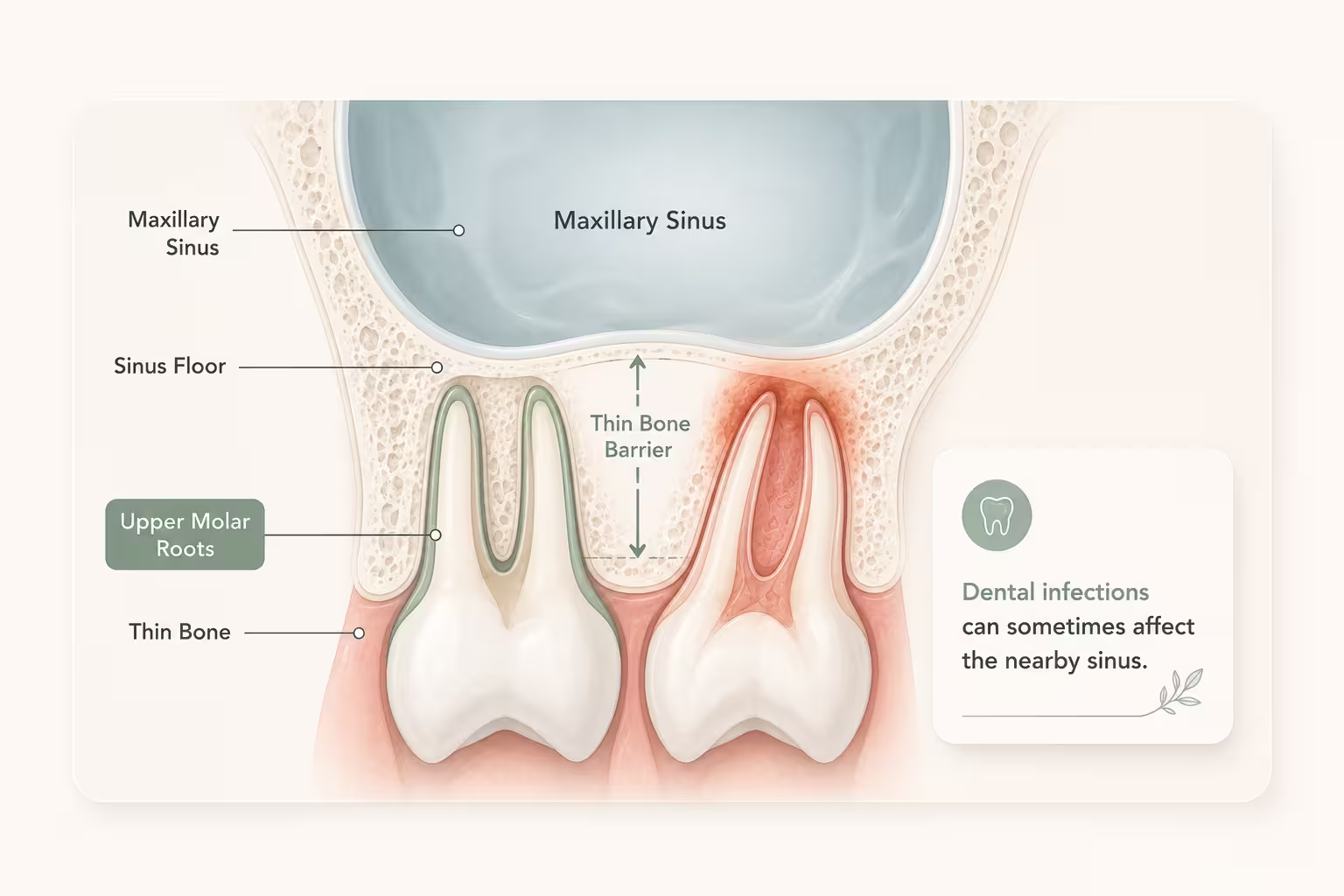 Upper molar roots sit millimeters from the sinus floor — sometimes with no bone between them.
Driver 4: Your teeth
Back to the statistic we opened with.
The roots of your upper molars sit right beneath the floor of the maxillary sinus. Sometimes less than a millimeter of bone separates them. Sometimes nothing does. An infection at the tip of a root has a very short distance to travel.
Odontogenic sinusitis — sinusitis of dental origin — accounts for something like a quarter of chronic maxillary sinusitis cases. Individual studies range anywhere from 5% to 40%. Among people with unilateral maxillary sinus opacification on imaging, dental causes explain 45–72% of cases.
Most trace back to dental work — implants, extractions, root canals, and the small openings they can leave behind. Those made up 65.7% of cases in a review of 674 patients. Infection at the root tip made up another 25.1%.
The signal to watch for is one-sidedness. In the study we opened with, symptoms on a single side were strongly linked to infection at a root tip. Is your congestion, pressure, or bad-smelling discharge always on the same side? Did it start soon after dental work? That deserves a closer look — not another round of the same antibiotic.
The outcome data makes the case better than any argument could. When dental treatment was paired with sinus surgery, success rates hit 96.4%. When the dental source was left untreated, that figure dropped to 73.9%.
No amount of gut work, dietary change, or nasal rinsing is going to resolve an abscessed molar. That one's a dentist's job.
Driver 5: Environmental and fungal exposures — separating the established from the contested
This is where you'll run into the widest range of claims online. So let's be clear about what sits where, before you spend money chasing it.
Well-established. Allergic fungal sinusitis is a known condition with clear criteria. It's an allergic response to fungus growing in the sinuses. It makes thick mucus and shows a distinct look on scans.
It's real, it's testable, and it's treated differently from normal sinusitis. Invasive fungal sinusitis is separate and urgent, seen mainly in people with weak immune systems. That one is an emergency, not a wellness topic.
Likely, and worth checking. Water-damaged buildings, air pollution, and cigarette smoke all harm that barrier layer. They also slow the tiny hairs that sweep mucus out. Smoking is a known risk factor for chronic sinusitis.
Do your symptoms ease when you travel and flare when you get home? Then take your home seriously. An air quality check, or a look for damp and leaks, is a fair next step.
Contested — and you should know it's contested. Mold illness, biotoxin illness, and Chronic Inflammatory Response Syndrome sit outside mainstream evidence. So does deep-nasal-swab testing for MARCoNS (multiple antibiotic-resistant coagulase-negative staphylococci). The published research here is thin. Most of it looks backward at old patient charts rather than forward. And most of it comes from the same small group of clinics that use the framework.
Even a recent study reporting a MARCoNS link called for "further prospective investigation." That's researcher-speak for this is a hunch, not a finding.
Here's what matters. These bacteria live in the noses of healthy people all the time. A positive swab tells you they're there. It doesn't tell you they're causing your symptoms. And it doesn't tell you that clearing them will change a thing.
I'm not telling you the framework is worthless. Some practitioners report real results, and absence of evidence isn't evidence of absence.
I am telling you this. If someone sells MARCoNS testing as settled science, or reaches for it before ruling out the drivers above, you're entitled to ask why.
Driver 6: The gut-immune axis and food sensitivities
Here's where I want to slow down. This is the section a functional medicine article is expected to oversell. I'd rather not.
What's well supported. Your mucosal immune system is one connected network, not a set of sealed compartments. What happens in your gut shapes how immune cells behave elsewhere in your body. The gut-lung axis is a credible, active field of study.
The barrier hypothesis holds that damage across several of these surfaces drives the rise in chronic inflammatory disease. That's serious science, not fringe thinking.
What's likely but unproven. That treating gut dysbiosis clears chronic sinusitis on its own. The gut-sinus connection has real mechanism behind it. What's missing is solid trial evidence that gut-focused treatment fixes sinus disease by itself.
What varies by person. Food sensitivities. Dairy and gluten dominate the talk around sinus infection food sensitivities. Some people notice less congestion and mucus after cutting them. Others notice nothing.
A structured elimination and reintroduction, ideally with a practitioner's help, is the only real way to learn which one you are. And it's low-risk to try — more than you can say for a fourth round of antibiotics.
The fair position: support your gut health and cut inflammatory foods. The upside is real and the downside is small. Just don't let it stand in for finding which of Drivers 1 through 5 is running the show.
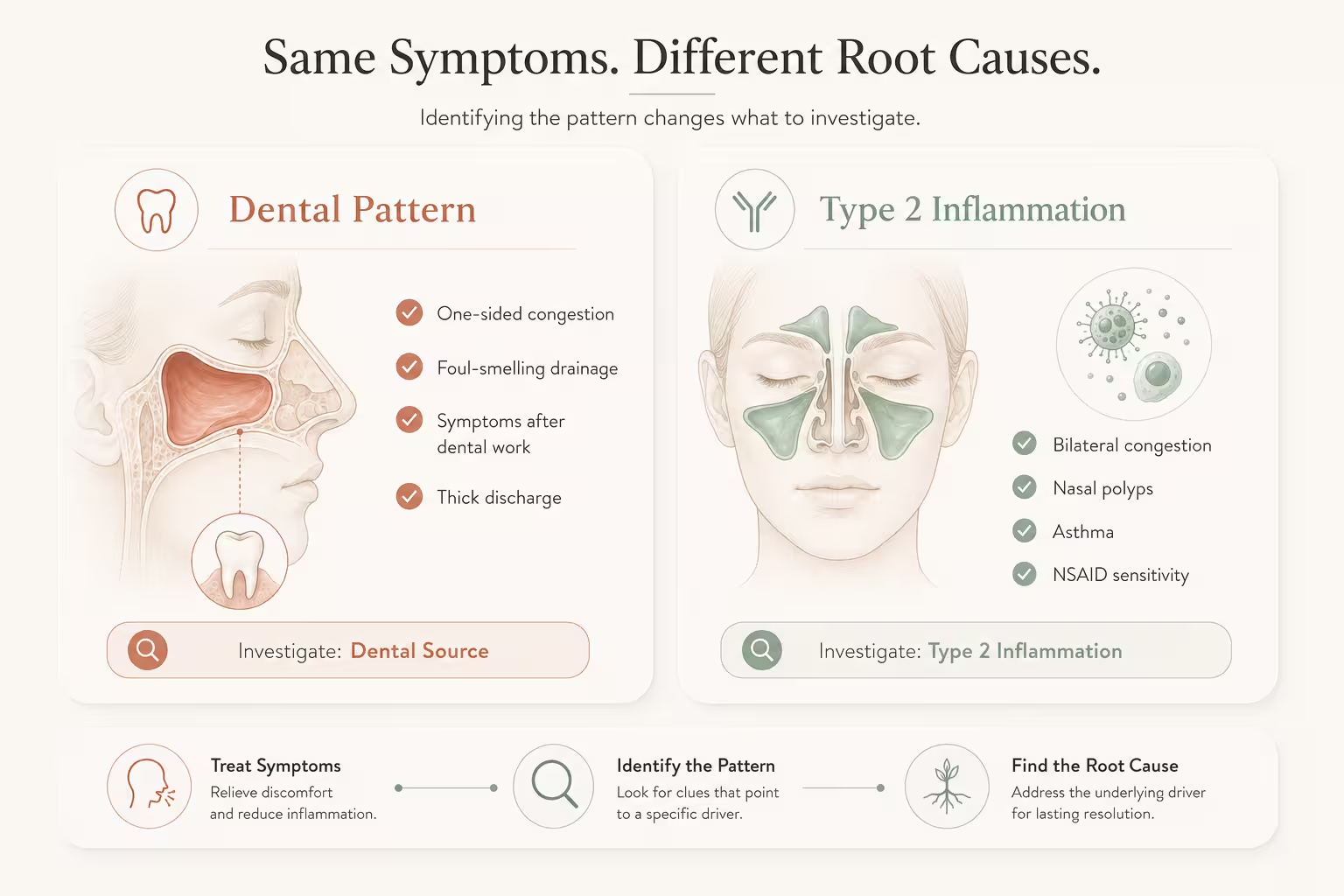 Same complaint, different mechanism — and different investigations.
Two people, two very different root causes of chronic sinusitis
Consider Maya, a composite of a presentation I hear about constantly. She's 38, and she's been congested for two years — always worse on the right side. One round of antibiotics helped for a while, then the symptoms crept right back.
On her own, she'd worked through the usual chronic sinusitis natural remedies. Saline rinses. Quercetin. An anti-inflammatory diet for sinus infections. Modest results at best.
The steady one-sidedness is the detail that matters most. A pattern like this is worth asking about head-on. Has a dental source ever been ruled out? Did anyone check her upper teeth on those scans?
Consider Rachel, 45. Congestion on both sides. No sense of smell for eighteen months. Polyps removed twice already. Asthma that started at 40. And a vague, half-noticed sense that ibuprofen "just doesn't agree with her."
Rachel's pattern points toward type 2 inflammation, possibly AERD. Functional support has a real role here. But the core question is which pathway keeps regrowing those polyps. And whether anyone has ever tested her for NSAID sensitivity.
Same complaint on paper. Entirely different investigations underneath it.
When to stop researching and see a doctor now
Some symptoms call for a doctor now, not a root-cause deep-dive. Please take these seriously:
- Recurrent nosebleeds with heavy crusting or scabbing
- Painful sores or ulcers inside the nose
- A new whistling sound when breathing through your nose
- Change in the shape of your nose or bridge collapse
- Unexplained fever, weight loss, or night sweats alongside sinus symptoms
- New cough, shortness of breath, or coughing up blood
- Blood in your urine or new swelling
- Vision changes, severe headache, or facial numbness
- Symptoms strictly on one side that keep getting worse despite treatment
Several of these can point to granulomatosis with polyangiitis, an autoimmune disease that inflames small blood vessels. Between 85% and 100% of patients have ear, nose, and throat symptoms. Often for months before anything else shows up.
It gets mistaken for plain sinusitis all the time. Delays in diagnosis are reported in 60% of cases. It's rare, and it's treatable when caught.
Other items on that list can point to immune deficiency, structural problems, or, rarely, tumors. All good reasons to call your doctor this week — not add another supplement.
A functional medicine sinusitis treatment plan and a standard medical workup aren't rivals here. Ruling out the dangerous things first is what makes root-cause work on chronic sinusitis safe to do.
Finding the root cause of chronic sinusitis: what to actually investigate
Here's a reasonable sequence to bring to your next appointment — with your primary care doctor, your ENT, or both:
- Nasal endoscopy and imaging — including a direct look at the upper teeth. Ask for this by name if your symptoms are one-sided.
- Endotype markers — a blood eosinophil count, total IgE, and whether you have asthma. These place you on the type 2 / non-type 2 map.
- A direct NSAID history — not "are you allergic," but "what happens to your nose when you take ibuprofen."
- A look at your surroundings — damp or water damage at home or work, whether symptoms ease when you travel, job exposures, smoking.
- Structural check — a deviated septum, blocked drainage pathways, or poor cilia function where it applies.
- Gut and diet work — as a base to build on, alongside the above. Never instead of it.
Notice that most of this runs through normal medical channels. No functional practitioner required. Root-cause thinking isn't a separate system running beside your regular care. It's a way of insisting the standard workup gets finished, all the way through.
The one thing to take away
You've likely been treated for a symptom pattern rather than a mechanism. That's the gap.
Chronic sinusitis isn't one condition with one cause. It's at least six upstream drivers wearing the same mask. Antibiotics touch a small slice of just one. That's why the fourth round works no better than the first.
The root cause of chronic sinusitis, in your case, is knowable. But it takes asking the category question first. Is this driven by swelling, structure, a tooth, your surroundings, or a broken barrier? Ask that before reaching for another prescription or another supplement.
Go back through the six drivers. Note which ones sound like you. Bring that list to your next appointment, and ask about the ones nobody has checked yet.
Frequently Asked Questions
What is the root cause of chronic sinusitis?
Why do I keep getting sinus infections after antibiotics?
Can gut health really affect chronic sinusitis?
How do I know if my sinus problem is coming from my teeth?
Is MARCoNS a real cause of chronic sinusitis?
Can food sensitivities trigger sinus congestion?
Sources
- Prevalence of Potential Adult Chronic Rhinosinusitis Symptoms in the United States — Otolaryngology–Head and Neck Surgery (PMID 29737908)
- Chronic Rhinosinusitis at the Interface of Type 2 Inflammation, Epithelial Barrier Dysfunction, and Microbiome Dysbiosis — Microorganisms, 2026
- Chronic Rhinosinusitis, S. aureus Biofilm and Secreted Products, Inflammatory Responses, and Disease Severity (PMID 35740385)
- Characterization of Chronic Rhinosinusitis Patients Based on Markers of Type 2 Inflammation — CHRINOSOR European Registry
- Clinical evaluation and diagnosis of aspirin-exacerbated respiratory disease — Journal of Allergy and Clinical Immunology
- Aspirin Exacerbated Respiratory Disease: Epidemiology, Pathophysiology, and Management — PMC6473909
- Odontogenic causes complicating the chronic rhinosinusitis diagnosis — PMC7878247
- Chronic Maxillary Rhinosinusitis of Dental Origin: A Systematic Review of 674 Patient Cases — PMC4000986
- Expert consensus on odontogenic maxillary sinusitis multi-disciplinary treatment — International Journal of Oral Science, 2024
- An Unveiling of the Misdiagnosis of Granulomatosis with Polyangiitis as Acute Sinusitis (PMID 40941705)
Fact Checked By Dr. Prerana Suryawanshi, MBBS
This medical analysis has been peer-reviewed and vetted by a credentialed practitioner to ensure diagnostic safety.

Written by Dr. Pooja, PharmD
Dr. Pooja didn't set out to write about gut health and hormones. She set out to become a pharmacist — learning how drugs move through the body, why they interact the way they do, and what it actually takes to prove a treatment works. That training is still the lens she writes through today.
View all articles by Dr. Pooja