Root Cause of Low Ferritin: 5 Reasons Iron Stores Stay Empty
Iron pills not working? Learn the real root cause of low ferritin — blood loss, malabsorption, inflammation — and how to actually refill your iron stores.
On this page Read more
- What Causes Low Ferritin? (The Quick Answer)
- What Is Ferritin — and Why It Matters More Than Your Iron Level
- Low Ferritin Symptoms: What Empty Iron Stores Feel Like
- The "Normal" Lab Range Is Not the Same as Optimal
- The 5 Root Causes of Low Ferritin
- Why Root Causes Rarely Show Up Alone
- How to Raise Ferritin Levels Naturally — Starting With the Right Questions
- Key Takeaways
- Frequently Asked Questions
- The Bottom Line
Reading time: ~9 min | Last reviewed: July 2026
Meet Maya. She'd done everything right.
Eight months of iron supplements, every single morning. More spinach in her salads. More red meat on her plate. More lentil soup from that recipe her nutritionist suggested. She even downloaded a food-tracking app to make sure she was hitting her numbers.
Then her annual bloodwork came back. Her primary care doctor glanced at the panel and said the five words she'd come to dread: "Everything looks pretty normal."
Her ferritin was 14.
Here's what nobody told Maya — and what most doctors don't have time to explain in a 15-minute appointment: the root cause of low ferritin is almost never "you didn't eat enough iron." Low ferritin isn't the problem. It's the smoke alarm going off in your house. Keep swapping batteries without finding the fire, and you can supplement for years while that number barely moves.
That's exactly what this post is here to fix.
What Causes Low Ferritin? (The Quick Answer)
The root cause of low ferritin is almost always one of five drivers: chronic blood loss (most often heavy periods), poor iron absorption in the gut, chronic inflammation that locks iron away, increased demand from pregnancy or endurance training, or inadequate dietary intake. Most people have two or more happening at once.
We'll walk through each one — including the signs that point to your driver. But first, a quick foundation that makes everything else click.
What Is Ferritin — and Why It Matters More Than Your Iron Level
Think of ferritin as your body's iron savings account. It's the protein that tucks iron away inside your cells and holds it until your body needs it. Serum iron — the number on a standard panel — is more like the cash in your wallet. It can look perfectly fine on any given Tuesday even when your savings account is nearly overdrawn.
That one distinction changes everything.
Ferritin is almost always the first marker to drop when your iron supply runs low — often long before hemoglobin falls enough for a doctor to call it anemia. This is how you can have low ferritin with totally normal iron levels and still feel completely wiped out.
This early stage even has a name: iron deficiency without anemia (non-anemic iron deficiency). And it's far more common than most people realize — research on ferritin thresholds estimates it's at least twice as common as iron-deficiency anemia itself. (Postgraduate Medicine (via PubMed)) Millions of Americans are walking around with depleted iron stores, "normal" bloodwork, and zero explanation for how they feel.
Sound familiar?
Low Ferritin Symptoms: What Empty Iron Stores Feel Like
Low ferritin symptoms show up well before anemia does — which is exactly why so many people feel terrible with "normal" labs. The most common signs include:
- Fatigue that sleep doesn't fix
- Hair shedding or noticeable thinning
- Brain fog and trouble concentrating
- Cold hands and feet
- Restless legs at night
- Breathlessness climbing stairs
- Pale skin and brittle nails
- Cravings for ice (a form of pica — and a surprisingly classic iron sign)
You don't need every symptom on the list. Two or three that persist — especially fatigue plus shedding — are reason enough to look deeper. Low ferritin and hair loss travel together often enough that dermatologists check iron stores as a routine part of a shedding workup. hair loss causes in women
The "Normal" Lab Range Is Not the Same as Optimal
Here's where things get both frustrating and important.
Most US labs flag ferritin as low only below roughly 12–15 ng/mL. The World Health Organization defines iron deficiency in healthy adult women at ferritin under 15 ng/mL. (World Health Organization) But "not deficient" and "thriving" are two completely different bars.
The American Society of Hematology agrees. Its updated draft guidance recommends a ferritin cutoff of 30 ng/mL or lower to diagnose iron deficiency — and explicitly cautions against the old 15 ng/mL threshold, because it misses too many people who are genuinely struggling. The research backs this up: one diagnostic study found a 45 ng/mL cutoff identified iron deficiency with 85% accuracy. The old 15 ng/mL cutoff? Just 59%. (American Society of Hematology)
Maya's ferritin of 14 wasn't "normal." It was a warning light her standard lab panel was calibrated to ignore.
When a practitioner talks about optimal ferritin levels — many aim for 40–70 ng/mL to fully resolve symptoms like fatigue and shedding — they're not inventing numbers. They're working from evidence that "just above the deficiency cutoff" and "enough iron to actually feel good" are miles apart.
The 5 Root Causes of Low Ferritin
If low ferritin is the smoke, here are the five fires that most commonly cause it. Most people are dealing with one or two at once — and finding yours is the whole point.
1. Blood Loss: The Root Cause Most Women Never Connect to Their Symptoms
Every drop of blood you lose takes iron with it. Slow, chronic blood loss is one of the most common — and most overlooked — root causes of low ferritin. Especially in women.
What's happening: Chronic blood loss → your body loses iron faster than food can replace it → ferritin stores get tapped to keep red blood cell production going → the tank runs dry.
For women who still menstruate, heavy bleeding is the single biggest driver of low ferritin in women in the US. And it's incredibly common to underestimate. Many women have normalized bleeding that's medically considered heavy — and never once connect it to the exhaustion hitting them every afternoon. If your periods feel like a lot, raise it with your OB-GYN. Don't brush it off as just "how you are."
For men and postmenopausal women, the focus shifts to ruling out hidden GI bleeding from ulcers, polyps, or other sources — a conversation worth having with your primary care doctor or gastroenterologist.
Signs this is your root cause: Heavy or long periods, significant clotting, a history of stomach ulcers, or near-daily NSAID use (think ibuprofen most days of the week). Unexplained low iron in any man or postmenopausal woman always warrants a closer look.
2. Malabsorption: You're Eating Iron, But Your Gut Isn't Absorbing It
You can eat every iron-rich food on the list and still run low if your gut can't pull that iron in. This is the number one reason people say, "I've been taking iron forever and nothing's working."
What's happening: Iron absorption happens mostly in the upper small intestine, and it depends on adequate stomach acid to free iron from food. When that process breaks down, iron passes straight through — out rather than in.
The common culprits behind these iron absorption problems: celiac disease and inflammatory bowel disease (which damage the gut lining where absorption happens), H. pylori infection, low stomach acid, long-term acid-blocking medications like PPIs (Prilosec, Nexium, omeprazole), and a history of gastric bypass. (NIH Office of Dietary Supplements)
Practically, this means: if your ferritin won't move despite months of supplementing, you likely have low ferritin despite iron supplements because of an absorption issue — not a dosing problem. More iron won't fix a gut that can't absorb it.
Signs this is your root cause: Chronic bloating, reflux, a celiac or Crohn's diagnosis, long-term PPI use, or ferritin that won't budge no matter how much iron you take.
3. Chronic Inflammation: The Hidden Factor That Locks Iron Away
This one's sneaky — because inflammation can both cause low ferritin and hide it at the same time.
What's happening: When your body senses infection or ongoing inflammation, it produces a hormone called hepcidin. Hepcidin's job is to lock iron away — blocking absorption in the gut and trapping iron inside storage cells. It's an ancient protective response, because many pathogens feed on iron. But when chronic inflammation keeps hepcidin elevated — from autoimmune conditions, ongoing gut issues, chronic stress, or lingering infection — iron stays locked up even when you desperately need it.
Here's the twist: ferritin is also an "acute-phase reactant," meaning it rises during inflammation. Someone with real iron deficiency plus active inflammation can show a falsely reassuring number. Their stores are depleted; the inflammation is masking it. That's exactly why a complete workup pairs ferritin with an inflammation marker like CRP and with transferrin saturation — never ferritin alone.
Signs this is your root cause: An autoimmune condition like Hashimoto's, lupus, or rheumatoid arthritis; chronic gut issues; or iron panel results that just don't match how you feel.
4. Increased Demand: Your Body Needs More Iron Than You're Giving It
Sometimes nothing is broken. Your body's iron requirements have simply gone up — and intake hasn't kept pace.
What's happening: Certain life stages dramatically raise iron needs. When demand outpaces supply, your body dips into ferritin reserves to cover the gap — and over time, those reserves run out.
The most common scenarios: pregnancy (blood volume expands by up to 50%), adolescent growth spurts, and endurance training. Runners especially — thousands of foot strikes per run destroy red blood cells, compounding iron losses from sweat and GI microbleeding during hard training. A marathoner eating an "adequate" diet for a sedentary person can sit in chronic iron deficit without realizing it.
Signs this is your root cause: You're pregnant, recently postpartum, a teenager, or training heavily for endurance sports — and your energy or performance has steadily declined.
5. Inadequate Intake and Missing Co-Factors
Yes, diet matters. But it's usually the last root cause to investigate, not the first — and it's rarely about iron alone.
What's happening: Plant-based (non-heme) iron is far less bioavailable than the heme iron in animal proteins. Vegans and vegetarians need significantly more total iron and smarter pairings to match what a meat-eater absorbs. Iron metabolism also depends on co-factors: vitamin C dramatically boosts absorption, while copper, vitamin A, and adequate protein play essential supporting roles.
Globally, the WHO identifies inadequate dietary iron as the most common of all ferritin deficiency causes. In the US, though, diet-only deficiency clusters among people with very restrictive eating patterns — or those unknowingly blocking absorption by drinking coffee or tea with iron-rich meals, or taking calcium supplements at the same time as iron.
Signs this is your root cause: A vegan or vegetarian diet without careful planning, very little animal protein, or a habit of pairing iron-rich meals with absorption blockers (that morning coffee with your eggs, for example).
Why Root Causes Rarely Show Up Alone
They pile on top of each other.
Picture a woman with heavy periods (blood loss) who also has undiagnosed celiac disease (malabsorption). She's losing iron from two directions at once — and neither a supplement nor a diet change fixes both. Now add a season of chronic stress, which raises inflammation and, in turn, hepcidin, and her ferritin can crater no matter how clean her diet is.
This is the whole point of root-cause thinking: low ferritin is an output. Multiple inputs usually drive it. Treating one input while ignoring the others is exactly why so many people stay stuck.
It's also why "just take more iron" fails so often. It's not the wrong answer. It's an incomplete one.
How to Raise Ferritin Levels Naturally — Starting With the Right Questions
If you want to move the number and feel the difference, order of operations matters. Learning how to raise ferritin levels naturally doesn't start at the supplement aisle. It starts with finding out what's actually draining the account.
Ask your doctor to run:
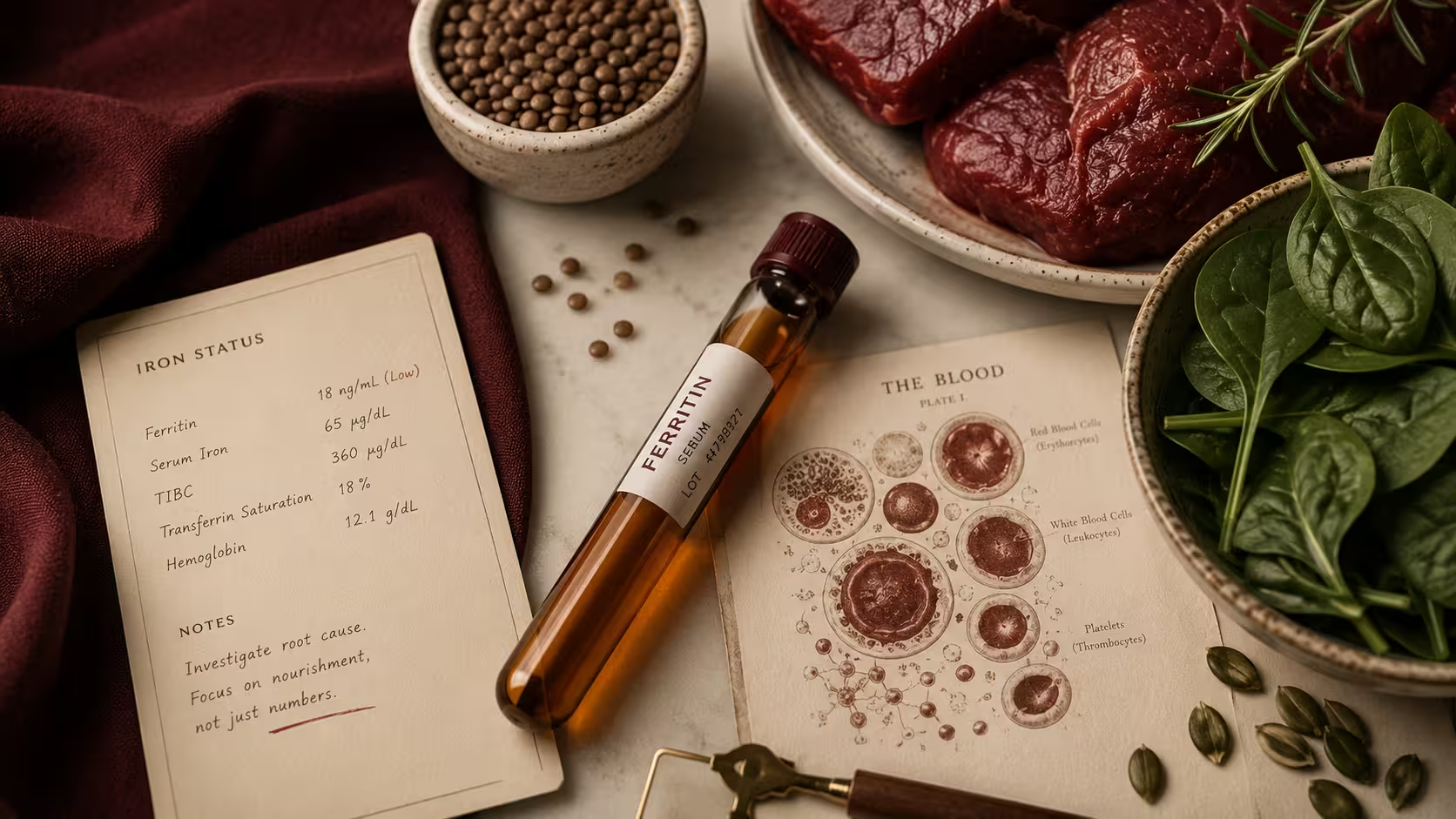
- A complete iron panel — ferritin, serum iron, transferrin saturation, and TIBC together. Reading ferritin alone is like checking your checking account without looking at your credit card bill.
- Inflammation markers (CRP) — so a falsely "normal" ferritin can't cover for a real deficiency.
- A real conversation about blood loss — including a frank discussion about your periods (not just "are they regular?") and, if warranted, a GI workup.
- Gut and absorption screening — celiac antibody testing, H. pylori testing, and a review of any acid-suppressing medications.
- Thyroid function — thyroid health and iron metabolism are deeply connected; treating one without the other slows progress on both.
Once you know which root cause is driving your picture, the path forward gets clearer — and a lot more effective.
Maya's full workup turned up two things: borderline-positive celiac markers, and periods far heavier than she'd ever told anyone. Eight months of iron supplements hadn't touched either issue. Addressing both of them finally did.
Key Takeaways
- Ferritin is your iron savings account — it drops long before anemia shows up on standard labs
- Iron deficiency without anemia is roughly twice as common as anemia itself — "normal" bloodwork can hide it
- The five root causes: blood loss, malabsorption, inflammation, increased demand, inadequate intake — most people have more than one
- Ferritin that won't rise despite supplements points to an unaddressed root cause, not a dosing problem
- Inflammation can falsely raise ferritin — always pair it with CRP and transferrin saturation
- "Normal" (above 15 ng/mL) and optimal (40–70 ng/mL for many practitioners) are very different bars
- Test before you treat — excess iron can cause harm
Frequently Asked Questions
What is the most common root cause of low ferritin?
Can you have low ferritin without anemia?
Why won't my ferritin rise even though I'm taking iron supplements?
Can low ferritin cause hair loss?
What ferritin level is considered too low?
Does inflammation affect ferritin test results?
The Bottom Line
Maya spent eight months treating the smoke. Nobody helped her find the fire. That wasn't her fault — it's a real gap in how conventional medicine is set up to handle this.
If your ferritin is low — or "normal" while you feel every symptom on that list — the most useful next step isn't a higher dose. It's a better question: what is actually draining your iron stores?
Your body isn't broken. It's signaling. You just need to know how to listen.
Ready to get answers? Download the free Iron & Ferritin Lab Guide — exactly which markers to ask for, what your numbers mean, and how to walk into your next appointment prepared.
Fact Checked By Dr. Prerana Suryavanshi, MD, MBBS
This medical analysis has been peer-reviewed and vetted by a credentialed practitioner to ensure diagnostic safety.

Written by Dr. Pooja, PharmD
Dr. Pooja didn't set out to write about gut health and hormones. She set out to become a pharmacist — learning how drugs move through the body, why they interact the way they do, and what it actually takes to prove a treatment works. That training is still the lens she writes through today.
View all articles by Dr. Pooja